
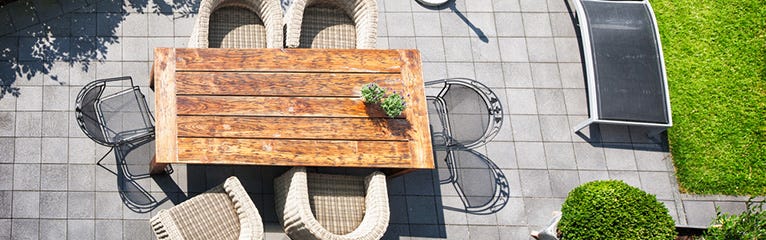
Paving is the perfect way to increase kerb appeal, extend the use of your garden, or to just create an attractive edge around your lawn. We stock a huge range of paving options, including: driveway block paving, decorative paving, natural stone paving, council slabs and a full range of accessories to finish off the look you are after!
To preserve and keep your garden patio in excellent condition you will need to perform some regular maintenance. Below we have put together our five top tips to help you maintain and keep your garden paving looking attractive!
- Regular brushing: Regular brushing clears off dirt and debris and also helps break up small weeds that may be growing through your block paving which will stop them spreading further. A good brush and some warm soapy water should be enough to work well. However, to remove mould, fungi or algae then why not try using Barrettine Decking and Patio cleaner which will also help remove general dirt and grime from your paving.
- Power washing: Even if you regularly brush your pavement, a more thorough clean will be necessary occasionally. You can rent or purchase a steam or jet power washer. Beware to take care around pavement joint areas as the high pressure could damage or break off the mortar.
- Frequent weeding: You will need to weed regularly to prevent weed overgrowth. Always try to remove weed at their roots to prevent them from growing back. If pulling weeds does not seem to be controlling the problem, the next option is to use a weed killer.
- Fill joints: Paving joints play an important function by linking the concrete or stones together and providing structure. Cleaning them can be tricky, as this is the most vulnerable area of your garden pavement. In addition to keeping joint areas weeded, you’ll need to patch and repair occasionally. When pulling weeds removes sand from joints, you’ll need to fill in gaps or you’ll just get more weeds. If mortar shows signs of cracking or flaking off, there are various formulas you can use to make repairs.
- Sealing paving stones: patio sealers prevent moisture from seeping in and damaging concrete or stone pavement. There is a wide variety of products but do take care to read the label as the wrong one can damage the surface of your paving. You will still have to clean regularly, and you will need to reapply the sealant every few years, based on the manufacturer recommendations.
Patio and garden paving maintenance isn’t difficult, but it does require an ongoing commitment to keep surfaces clean and your paving weed free. A little regular work will keep problems from developing and will keep your garden stones looking great! We hope these tips help you maintain your garden paving!